Well water iron
Iron filter or water softener: which one actually handles iron?
Quick answer
A water softener removes only dissolved (ferrous) iron, and only up to the resin manufacturer published limit, commonly 1 to 5 ppm. An oxidizing iron filter such as an air injection system handles higher levels, ferric iron, and manganese or sulfur alongside it. The choice is decided by a laboratory test, not by preference.
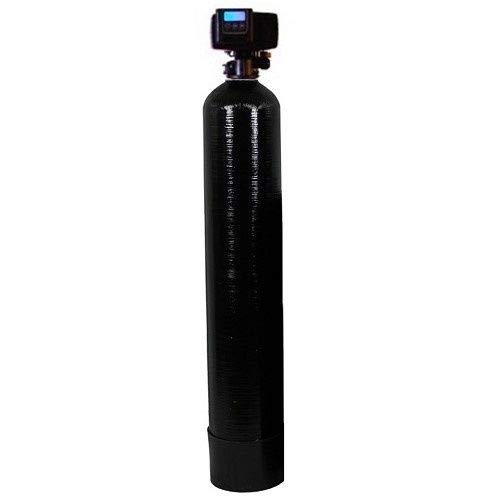
DuraWater Fleck 5600SXT Air Injection Iron Filter, 1.5 Cubic Foot
$899.00 Published specsOxidizes dissolved and already oxidized iron against an air pocket, with no chemical feed and no published iron ceiling as low as a softener resin.
Best for: Well water with measured iron, manganese or a sulfur odor together
Check price on Amazon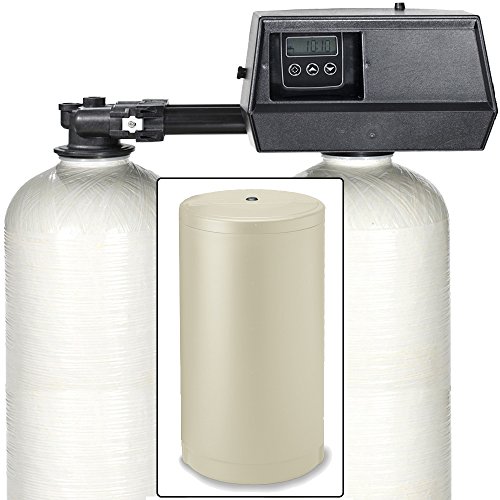
AFWFilters Iron Pro Twin Tank Water Softener with Fleck 9100SXT, 48,000 Grain
$1,689.00 Published specsA twin tank softener built with fine mesh resin specifically because it holds a published iron tolerance, rather than a general purpose resin asked to do a job it was not rated for.
Check before buying: Check the published iron limit for this unit against your laboratory result. A softener is not an iron filter and fouls if it is used as one.
Best for: Well water with a modest measured dissolved iron level and continuous demand
Check price on AmazonThis comparison gets framed as a product choice, but it is really a measurement question wearing a product choice as a disguise. A water softener that is asked to remove iron it was never rated for does not fail gracefully, it fouls: the resin bed clogs with iron that never gets rinsed out during a normal regeneration, and softening performance drops along with it.
An oxidizing iron filter is a different machine built for a different job, and it is frequently the more expensive purchase, which is exactly why people try the softener route first. The laboratory result is what tells you whether that shortcut is safe or whether it is the reason the whole system needs a rebuild in eighteen months.
On this page
What is the difference between an iron filter and a water softener?
A water softener works by ion exchange: resin beads swap dissolved calcium, magnesium and, up to a point, dissolved ferrous iron for sodium or potassium. An iron filter works by oxidation: it converts dissolved iron into a solid using air, or occasionally a chemical oxidizer, then physically strains the solid out of the water on a backwash cycle. They are solving the same visible problem with two entirely different mechanisms, and only one of those mechanisms is designed to also catch iron that has already turned solid.
How much iron can a softener actually handle?
Manufacturers publish an iron tolerance for their resin, and it varies by brand and by whether the resin is standard or fine mesh. This is a published figure from the manufacturer, not a rule of thumb.
A published iron tolerance commonly sits between 1 and 5 ppm dissolved iron, and that ceiling assumes the iron is fully dissolved, not oxidized or biological.
Published figure A published standard, regulatory limit, unit conversion or manufacturer specification. It does not change because somebody disagrees with it.
| Condition | What happens |
|---|---|
| Dissolved iron under the published limit | Resin exchanges it along with hardness minerals |
| Dissolved iron above the published limit | Resin overloads faster than regeneration clears it, capacity drops |
| Any amount of ferric (already oxidized) iron | Particles accumulate in the bed and valve; resin is not designed to filter solids |
| Iron bacteria present | Fouls the bed with biological slime regardless of concentration |
Always check the published iron limit for the specific resin, not a generic figure. Fine mesh resin generally tolerates more iron than standard resin.
Why do people compensate hardness for iron when sizing a softener?
Even within its published limit, a softener sized on hardness alone will regenerate more often than expected on iron bearing water, because the resin is exchanging iron capacity as well as hardness capacity. The trade adds roughly 3 to 5 grains of compensated hardness per part per million of dissolved iron before sizing the unit, which is a convention taught throughout the industry rather than a number any manufacturer certifies. It only applies to dissolved, ferrous iron; ferric iron and iron bacteria are not something a compensation factor fixes.
When is an iron filter the right call instead?
An air injection iron filter such as DuraWater Fleck 5600SXT Air Injection Iron Filter, 1.5 Cubic Foot draws a pocket of air into the tank on every backwash and oxidizes iron against it, with no chemical feed required. Because it works by oxidation and physical straining rather than ion exchange, it handles ferric iron, higher measured levels, and often manganese or a sulfur odor in the same pass, which is the combination a straight softener was never built to touch. This is generally the more expensive and more involved installation, which is exactly why a laboratory result should decide the purchase rather than starting with the filter and hoping it was overkill.
Can you run both together?
Yes, and on a well with meaningfully iron bearing water this is the common, correct answer rather than an either or choice. An iron filter goes first to strip out the bulk of the iron, manganese or sulfur, then a softener downstream only has to handle hardness and whatever small residual iron slips through, which keeps the softener resin clean and its regeneration schedule predictable.
Frequently asked questions
Will a water softener remove iron stains from my toilet and sinks?
Only if the iron causing the stains is dissolved and within the resin published limit. If the stains come from iron that is already oxidized by the time it reaches the fixture, a softener will not stop it, because a softener exchanges dissolved ions rather than filtering solid particles. A laboratory test that separates dissolved from total iron tells you which situation you are in.
How do I know if my softener is being fouled by iron?
Watch for softened water performance dropping between regenerations faster than it used to, an orange or rust tint inside the brine tank or resin tank, and a musty or metallic smell from the unit. These point at iron accumulating in the bed rather than being cleared, which usually means the iron level exceeds what that resin was ever rated to exchange.
Is a fine mesh resin softener the same thing as an iron filter?
No. Fine mesh resin is still ion exchange media, just built with a smaller bead size that holds a somewhat higher published iron tolerance than standard resin. It is still limited to dissolved iron within that published figure and still cannot remove ferric iron or handle iron bacteria the way a dedicated oxidizing filter can.
What order should an iron filter and a softener go in?
The iron filter goes first, closest to the pressure tank, so it removes the bulk of the iron, manganese or sulfur before the water reaches anything downstream. The softener follows and only has to manage hardness plus whatever small amount slips past, which keeps its resin bed clean and its regeneration schedule the one the manufacturer intended.
Can I just oversize a softener instead of buying a separate iron filter?
Oversizing buys you more grain capacity between regenerations, but it does not raise the resin published iron tolerance or give a softener the ability to remove ferric iron or iron bacteria. Past that published ceiling, a bigger softener fouls on the same schedule as a smaller one, just with a larger and more expensive resin bed to replace.
Does either option remove iron bacteria?
No. Iron bacteria is a living colony, not a dissolved or oxidized mineral, and neither a softener nor a standard oxidizing iron filter clears it. Iron bacteria is a well contamination issue that typically needs shock chlorination and retesting by a certified laboratory, usually with a licensed well professional involved rather than a filter purchase.
Get the complete water treatment shopping list
Every item in the starter, complete and premium systems for both city water and well water, with running totals, in one printable list. It opens with the test kit, because that is genuinely the first purchase. No charge.
One list, no sequence of daily emails, and you can leave at any time.
Researched, not professional advice. This page is compiled from published standards, regulatory limits, manufacturer specifications and owner-review consensus, not hands-on testing. Nothing here diagnoses a water problem or says any product makes water safe to drink. Figures described as a rule of thumb are water treatment trade convention rather than published standards, and they are labeled that way wherever they appear. Test your water before you buy equipment: on city water start with the Consumer Confidence Report your utility publishes each year, and on a private well only a certified laboratory test tells you what you have. Bacteria, nitrate, lead, arsenic and PFAS are not do it yourself topics, they are invisible and tasteless, and they need a laboratory and usually a licensed professional rather than a product. Remember that a certification covers a specific claim under a specific standard, so "NSF certified" with no number attached tells you very little.