Softening
Which water softener resin should you rebed with?
Quick answer
One cubic foot of standard 8 percent crosslinked resin removes about 20,000 grains at an efficient 6 pound salt dose, rising to roughly 30,000 grains only at the 15 pound dose most nameplates are rated at. Resin that has gone yellow brown, cracked, or that shows up in the drain line after a decade or more of service is due for a rebed rather than another season.
A rebed replaces the resin inside an existing softener tank and valve rather than buying a whole new unit, and it is worth doing when the tank and control valve are otherwise sound. Standard residential resin is 8 percent crosslinked polystyrene sulfonate; a 10 percent crosslink version resists oxidative attack from chlorine better and lasts longer on chlorinated city water, at a modest price premium.
Capacity is governed by the same salt dose curve that decides how a whole softener performs: a cubic foot of resin does not have one fixed grain rating, it has a rating that rises with salt dose and flattens out well short of a straight line. That is true of new resin from any of the manufacturers below.
We compared manufacturer published crosslink percentage, capacity curves and bead specifications, along with verified owner reviews describing rebed outcomes, rather than rebedding a tank ourselves for this list.
On this page
- How much capacity does a cubic foot of resin actually deliver?
- 8 percent or 10 percent crosslink: does it matter for a rebed?
- Best resin for a first time rebed
- Best resin for chlorinated city water
- Best resin where provenance and bead quality matter most
- Signs a bed needs replacing rather than cleaning
- How to size the resin volume for your valve
- How we chose
How much capacity does a cubic foot of resin actually deliver?
Rebed capacity follows the identical salt dose relationship as a new softener, because it is the same resin chemistry either way.
A rebed delivers about 20,000 grains per cubic foot at an efficient 6 pound salt dose, rising to about 30,000 grains only at the 15 pound dose most factory nameplates are built on.
Published figure A published standard, regulatory limit, unit conversion or manufacturer specification. It does not change because somebody disagrees with it.
| Salt dose (lb per cu ft) | Grains delivered per cu ft | Grains removed per pound of salt |
|---|---|---|
| 6 | 20,000 | 3,333 |
| 8 | 22,400 | 2,800 |
| 10 | 24,000 | 2,400 |
| 12 | 27,000 | 2,250 |
| 15 (typical nameplate max) | 30,000 | 2,000 |
Rebedding with a different crosslink percentage or a premium bead does not raise this curve meaningfully; those upgrades buy chlorine resistance and bead life, not extra grains per cubic foot at a given salt dose.
8 percent or 10 percent crosslink: does it matter for a rebed?
Both are standard polystyrene sulfonate resin; the crosslink percentage describes how tightly the polymer chains are bonded. A higher crosslink bead resists the oxidative attack of free chlorine better, which translates to longer service life on city water treated with chlorine rather than chloramine. On non-chlorinated or lightly chlorinated well water, the cheaper 8 percent resin performs identically and there is little reason to pay the premium for 10 percent crosslink.
Best resin for a first time rebed
A complete refill kit takes the guesswork out of a first rebed by matching resin volume to a standard one cubic foot tank, rather than requiring a separate calculation before ordering.

AFWFilters Upgraded 10 Percent Crosslink Water Softener Refill Kit, 1 Cubic Foot
$232.99 Published specsA packaged one cubic foot refill kit sized for a standard residential tank, straightforward for anyone rebedding for the first time.
Best for: A first time rebed
Check price on AmazonBest resin for chlorinated city water
City water treated with free chlorine is the case where paying for 10 percent crosslink resin over the standard 8 percent bead is worth it, since it directly addresses the failure mode chlorinated water causes.
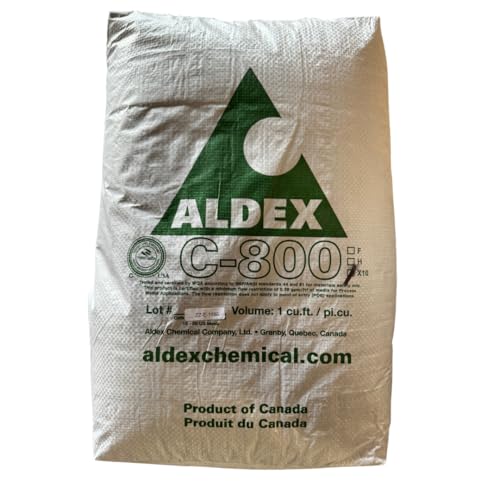
Aldex C800x10 10 Percent Crosslinked Water Softener Resin
$184.00A 10 percent crosslinked bead built to resist chlorine oxidation, aimed squarely at extending service life on chlorinated municipal water.
Best for: City water with a noticeable chlorine residual
Check price on AmazonBest resin where provenance and bead quality matter most
This tier is for a rebed where bead uniformity and manufacturing provenance are the actual priority, not price. A premium branded resin costs more per cubic foot than the standard options above for the same nameplate capacity.

US Water Systems ResinTech CNS10 Water Softener Resin, 1.0 Cubic Foot
$144.95A branded ResinTech bead with documented manufacturing provenance, chosen when bead consistency and sourcing matter more than shaving cost off a rebed.
Best for: A rebed where resin provenance actually matters
Check price on AmazonWho should not buy this tier: Skip a premium branded resin if you are rebedding a valve that is otherwise working fine with generic 8 percent resin on non chlorinated water. The upgrade pays off on bead life and chlorine resistance, not on raw capacity, so it is wasted money on water where those are not the actual complaint.
Signs a bed needs replacing rather than cleaning
Hardness leaking through despite a full salt tank and a working control valve is the most common signal, along with resin beads showing up in fixture aerators or the drain line, which usually means the underdrain screen or the bed itself has broken down. Resin that has visibly cracked, gone from tan to a dark yellow brown color, or that has been sitting for well over a decade of continuous service is a reasonable candidate for a rebed even without a specific failure yet. A resin cleanser addresses iron fouling; it does not reverse physical bead breakdown, and confusing the two wastes a maintenance cycle on a bed that actually needs replacing. See the full troubleshooting flow at how to troubleshoot a softener that is not softening.
How to size the resin volume for your valve
Resin volume is fixed by the tank the valve sits on top of, not by preference, and most residential tanks hold exactly one or one and a half cubic feet. Confirm the volume before ordering rather than guessing from the nameplate grain rating alone, since two different nameplate numbers can share the same tank size at different salt doses. The resin volume calculator works this out from tank diameter directly.
How we chose
We compared manufacturer published crosslink percentage, capacity curves and bead specifications against verified owner reviews describing rebed longevity and any post-rebed hardness leakage, rather than performing a rebed ourselves for this comparison. Where a manufacturer did not publish a specific capacity figure at a given salt dose, the standard published curve above was used instead of a guess.
How we chose
We did not test this equipment in person and we never claim to. Picks are researched from manufacturer specification sheets, published standards and regulatory limits, and the recurring themes in verified owner reviews. Every pick is matched to a real grain capacity, a real micron rating, a real certified claim or a real flow rating rather than to a price bracket, and it is placed in the tier where its published capability actually belongs. We rejected the unbranded flood that dominates several of these search results, because a softener is a pressure vessel on the main line and a filter is the only thing between a contaminant and a glass of water, and neither is a place for a product with no parts channel and no service path. Where a figure is trade convention rather than a published standard we label it that way, and where a manufacturer does not publish a figure we leave it out instead of estimating it. Above all, we do not recommend equipment for a problem nobody has measured.
Sources
- Aldex and US Water Systems published crosslink percentage and capacity specifications for softener resin
- NSF/ANSI 44 summary of residential softener performance testing
Frequently asked questions
How do I know if my softener needs new resin instead of a repair?
Persistent hardness leakage despite confirmed salt and a working control valve is the main signal, especially alongside resin beads appearing in fixture aerators or the drain line. Physically cracked or discolored resin, or a bed well past a decade of continuous service, is a reasonable candidate for a rebed even before a specific failure shows up. A resin cleanser will not reverse that kind of physical breakdown.
What is the difference between 8 percent and 10 percent crosslink resin?
The number describes how tightly the polystyrene sulfonate polymer chains are bonded. A 10 percent crosslink bead resists oxidative attack from free chlorine better than the standard 8 percent bead, which extends service life specifically on chlorinated city water. On non-chlorinated or lightly chlorinated well water, both perform essentially the same and the 8 percent option costs less.
How much resin does a standard water softener need?
Most residential tanks hold one or one and a half cubic feet of resin, and the exact volume is set by the tank diameter rather than by the nameplate grain rating alone. Confirm tank size against a manufacturer chart or the resin volume calculator before ordering, since two units with different grain ratings can share the identical tank and resin volume.
How long does water softener resin last?
Standard 8 percent crosslink resin commonly lasts ten to fifteen years on well maintained water, and longer on non-chlorinated well water without iron. Chlorinated city water shortens that life through oxidative attack unless a higher crosslink resin is used, and iron bearing water without regular resin cleanser use shortens it through fouling rather than chemical breakdown.
Can I rebed a softener myself?
Many owners do, since it mainly involves removing the control valve, vacuuming out the old resin and gravel, and refilling with a correctly sized replacement kit. The main risk is damaging the underdrain riser tube during removal, which requires a full tank replacement rather than just a resin swap, so handle that step carefully regardless of how confident the rest of the job feels.
Does a resin cleanser replace the need for a rebed?
No. A resin cleanser removes iron and manganese fouling from an otherwise sound bed and is a maintenance step, not a repair for physically degraded resin. Once beads have cracked, discolored significantly, or started passing through the underdrain screen, a cleanser will not restore lost capacity, and a rebed is the only fix at that point.
Get the complete water treatment shopping list
Every item in the starter, complete and premium systems for both city water and well water, with running totals, in one printable list. It opens with the test kit, because that is genuinely the first purchase. No charge.
One list, no sequence of daily emails, and you can leave at any time.
Researched, not professional advice. This page is compiled from published standards, regulatory limits, manufacturer specifications and owner-review consensus, not hands-on testing. Nothing here diagnoses a water problem or says any product makes water safe to drink. Figures described as a rule of thumb are water treatment trade convention rather than published standards, and they are labeled that way wherever they appear. Test your water before you buy equipment: on city water start with the Consumer Confidence Report your utility publishes each year, and on a private well only a certified laboratory test tells you what you have. Bacteria, nitrate, lead, arsenic and PFAS are not do it yourself topics, they are invisible and tasteless, and they need a laboratory and usually a licensed professional rather than a product. Remember that a certification covers a specific claim under a specific standard, so "NSF certified" with no number attached tells you very little.