Appliance protection
How to protect a tankless water heater from scale
Quick answer
Hard water scales a tankless water heater's heat exchanger, and most manufacturer warranties assume an annual descaling flush using a pump, hoses, a bucket and a descaling solution through isolation valves. A polyphosphate scale inhibitor protects that one appliance without softening the house; a whole house softener protects everything.
A tankless water heater has no storage tank to spread scale deposits across a large surface. Instead, incoming water flows through a compact heat exchanger that gets very hot very fast, and that combination of heat and small internal passages is exactly the condition that drives dissolved hardness minerals out of solution and onto the exchanger walls. Scale reduces heat transfer efficiency, raises operating cost, and in enough buildup can trigger error codes or reduce flow, which is why essentially every tankless manufacturer's warranty terms assume the owner performs a routine descaling flush rather than treating the unit as maintenance free.
This is a genuinely different maintenance task from the sediment flush kit sold for a tank-type water heater. A tank heater flush clears sediment settled at the bottom of a large tank; a tankless descaling flush circulates a solution through the compact heat exchanger to dissolve mineral scale bonded to its internal surfaces, and the two tools are not interchangeable.
On this page
Why tankless is more scale-sensitive than a tank heater
Scale formation accelerates with temperature and with the amount of surface area water is in close contact with relative to its volume, and a tankless heat exchanger delivers both: water is heated quickly to a high temperature inside narrow internal passages rather than gradually inside a large tank volume. Hardness that would settle relatively harmlessly at the bottom of a forty gallon tank instead deposits directly onto the exchanger surface doing the actual heat transfer in a tankless unit, which is why hardness that a household might otherwise tolerate becomes a real maintenance item once a tankless heater is installed.
The isolation valves that make a flush possible
A descaling flush works by circulating solution in a closed loop through the heat exchanger rather than through the rest of the house plumbing, and that loop is only possible because of a pair of isolation valves, commonly called service valves, installed on the cold inlet and hot outlet of the tankless unit itself. Most tankless water heaters ship with these valves either included or as a commonly specified accessory at install time, since without them a flush cannot be performed without disassembling plumbing connections each time. If a unit was installed without them, adding a service valve kit before the first scheduled flush is worth doing, since it turns every future flush back into a simple valve operation rather than a repeat plumbing job.
Running the flush, in order
- Turn off power or gas to the unit. Shut off electrical power or the gas supply to the water heater per the manufacturer manual before beginning, and allow the unit to cool if it was recently in use.
- Close the isolation valves to normal supply. Turn the hot and cold service valves to redirect flow away from the house plumbing and toward the flush ports, following the specific valve positions in the unit's manual.
- Connect the pump and hoses. Attach the flush kit's hoses to the service valve ports, with one hose to the pump inlet from the bucket and one returning circulated solution back to the bucket.
- Fill the bucket with descaling solution. Use the solution specified in the water heater manufacturer's own manual, whether that is a proprietary descaler or a diluted vinegar solution, since manufacturers differ on which they specify.
- Circulate for the specified time. Run the pump to circulate the solution through the heat exchanger for the duration given in the manufacturer manual, commonly in the range of thirty to sixty minutes.
- Flush with clean water. Disconnect the descaling solution and run clean water through the same loop for several minutes to clear the dissolved scale and any remaining solution from the exchanger.
- Return the isolation valves to normal position. Turn the service valves back to their normal operating position, restoring flow to the house plumbing.
- Restore power or gas and test. Turn power or gas back on, run hot water at a fixture, and confirm normal operation and flow before considering the flush complete.
Two different fixes for two different goals
A polyphosphate scale inhibitor and a whole house softener solve the same underlying scale problem in fundamentally different ways, and confusing them is a common and avoidable disappointment.
A polyphosphate inhibitor sequesters hardness to protect one appliance; hardness at the tap is unchanged. A whole house softener changes hardness everywhere.
Published figure A published standard, regulatory limit, unit conversion or manufacturer specification. It does not change because somebody disagrees with it.
| Approach | What it does | Hardness at the tap |
|---|---|---|
| Polyphosphate scale inhibitor | Sequesters dissolved hardness so it does not deposit inside the treated appliance | Unchanged |
| Whole house softener | Exchanges hardness minerals for sodium or potassium across the whole house | Reduced everywhere |
A polyphosphate feeder protects the appliance it is plumbed ahead of and nothing beyond that. It does not address scale on fixtures, in other appliances, or soap performance anywhere else in the house.
What a polyphosphate inhibitor actually does
A polyphosphate feeder injects a small, continuous dose of polyphosphate into the water ahead of the tankless heater, which binds to dissolved calcium and magnesium in a way that keeps them from crystallizing onto hot surfaces, protecting the heat exchanger without physically removing the hardness from the water. This is a genuinely useful and lower cost option for a household that has one appliance to protect and no interest in a whole house softener, but it is worth being precise about its limit: hardness measured at any tap in the house is exactly the same before and after a polyphosphate feeder is installed, because nothing has actually been removed. Soap performance, spotting on dishes and glassware, and scale on fixtures elsewhere in the house are all unaffected.
A whole house softener addresses the same scale risk to the tankless heater as a side effect of solving hardness everywhere else in the house at the same time, which is the better answer for a household already weighing whether to install one anyway.
Equipment for the flush and the alternative fix

Chromex Tankless Water Heater Flush Kit with NSF Certified Descaling Solution
$134.99A complete kit with pump, hoses, bucket and a descaling solution certified to NSF/ANSI 60 for drinking water treatment chemicals, everything most tankless warranties assume happens annually.
Best for: The annual flush on hard water
Check price on Amazon
Chromex Tankless Water Heater Flush Kit with Concentrated Vinegar Solution
$144.99The same kit with a vinegar based solution, the mildest approach and the one several manufacturer manuals name specifically.
Best for: A flush where the manufacturer manual specifies vinegar
Check price on Amazon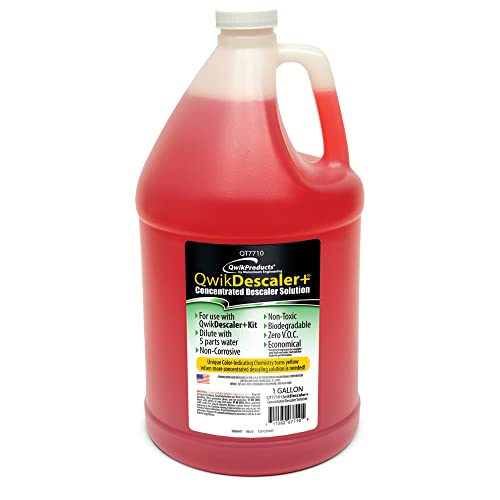
QwikDescaler Plus Concentrated Tankless Water Heater Descaler Solution, 1 Gallon
$28.43Solution only, for a repeat flush where the pump and hoses from a previous service are already on hand.
Best for: A repeat flush where the kit is already in the garage
Check price on AmazonHow we chose
We did not test this equipment in person and we never claim to. Picks are researched from manufacturer specification sheets, published standards and regulatory limits, and the recurring themes in verified owner reviews. Every pick is matched to a real grain capacity, a real micron rating, a real certified claim or a real flow rating rather than to a price bracket, and it is placed in the tier where its published capability actually belongs. We rejected the unbranded flood that dominates several of these search results, because a softener is a pressure vessel on the main line and a filter is the only thing between a contaminant and a glass of water, and neither is a place for a product with no parts channel and no service path. Where a figure is trade convention rather than a published standard we label it that way, and where a manufacturer does not publish a figure we leave it out instead of estimating it. Above all, we do not recommend equipment for a problem nobody has measured.
Frequently asked questions
How often should I flush a tankless water heater?
Annually is the interval most manufacturer warranties assume, though households on notably hard water sometimes flush more often. Check the specific manufacturer manual, since intervals vary by brand and warranty terms frequently make an annual flush a condition of coverage rather than an optional suggestion.
Do I need isolation valves to flush a tankless water heater?
Yes. Isolation valves, also called service valves, on the cold inlet and hot outlet let a pump circulate descaling solution in a closed loop through the heat exchanger without disassembling plumbing each time. Most tankless units ship with these included or as a commonly specified accessory; adding a service valve kit if one was skipped at install makes every future flush far simpler.
Does a polyphosphate inhibitor soften my whole house?
No. A polyphosphate feeder sequesters hardness minerals so they do not deposit inside the specific appliance it protects, but it does not remove hardness from the water at all. Hardness measured at any tap in the house stays exactly the same, and other fixtures and appliances see no benefit from it.
Can I use the same descaling kit for a tank and a tankless water heater?
No. A tank-type heater flush addresses sediment settled at the bottom of a large tank with a simple drain hose, while a tankless descaling flush circulates solution through a compact heat exchanger using a pump and isolation valves. These are different maintenance tasks for different problems, and the kits are built for one or the other.
What solution should I use to descale a tankless water heater?
Follow the specific manufacturer's manual, since brands differ on whether they specify a proprietary descaling solution or a diluted vinegar solution. Using an unspecified solution risks damaging internal components the manufacturer's chosen chemistry was tested against, and can affect warranty coverage if the flush is ever questioned.
Will a whole house softener protect my tankless water heater better than an inhibitor?
Both protect the heat exchanger from scale, but a whole house softener does it by actually removing hardness from the water everywhere in the house, while a polyphosphate inhibitor sequesters hardness only well enough to protect the one appliance it is plumbed ahead of. A household already considering a softener for other reasons gets the tankless protection as a side benefit.
Get the complete water treatment shopping list
Every item in the starter, complete and premium systems for both city water and well water, with running totals, in one printable list. It opens with the test kit, because that is genuinely the first purchase. No charge.
One list, no sequence of daily emails, and you can leave at any time.
Researched, not professional advice. This page is compiled from published standards, regulatory limits, manufacturer specifications and owner-review consensus, not hands-on testing. Nothing here diagnoses a water problem or says any product makes water safe to drink. Figures described as a rule of thumb are water treatment trade convention rather than published standards, and they are labeled that way wherever they appear. Test your water before you buy equipment: on city water start with the Consumer Confidence Report your utility publishes each year, and on a private well only a certified laboratory test tells you what you have. Bacteria, nitrate, lead, arsenic and PFAS are not do it yourself topics, they are invisible and tasteless, and they need a laboratory and usually a licensed professional rather than a product. Remember that a certification covers a specific claim under a specific standard, so "NSF certified" with no number attached tells you very little.