Shower filtration
Do shower filters actually help with hard water?
Quick answer
No shower filter softens water, full stop, since there is no room for an ion exchange bed in a device that size and no way to regenerate one; the AquaBliss SF100 reduces chlorine under NSF/ANSI 177, and an actual hardness problem needs a whole house softener instead.
This page has to say the honest thing first, because the search term brings people looking for something that does not exist: no shower filter softens water. Softening is ion exchange, a resin bed that has to hold enough capacity to matter and has to be regenerated with salt on a schedule, and there is no room for either inside a device that screws onto a shower arm. NSF/ANSI 177 is the standard that actually covers a shower filter, and it certifies chlorine reduction, not hardness.
What a shower filter genuinely does, cut the chlorine hitting skin and hair every time the water runs, is a real and worthwhile improvement, and it is often mistaken for a hardness fix because dry skin, dull hair and a tight feeling after a shower have more than one cause. The filters below are compared on their actual certified claim, checked against verified owner reviews. Nothing here was installed to test it. If a measured hardness number is the real problem, the last section on this page points to the equipment that actually changes it.
On this page
- What does NSF/ANSI 177 actually certify?
- Why does a chlorine filter feel like it is helping with hard water?
- Beginner: an inline filter aimed at the actual claim
- Intermediate: a combined filtered shower head
- Expert: if hardness is the actual measured problem, this is the real fix
- Do shower filter cartridges need to match the shower head?
What does NSF/ANSI 177 actually certify?
NSF/ANSI 177 is the standard written specifically for shower filtration systems, and it covers chlorine reduction. It does not cover hardness, does not cover lead or arsenic, and does not cover bacteria, none of which a shower filter is built to address. Compare that to NSF/ANSI 44, the standard for residential softeners, which covers salt efficiency and hardness capacity, an entirely different piece of equipment with a resin tank, a brine tank and a control valve that a shower filter has none of.
NSF/ANSI 177 covers chlorine reduction in a shower filter. Hardness removal belongs to NSF/ANSI 44, a completely different category of equipment.
Published figure A published standard, regulatory limit, unit conversion or manufacturer specification. It does not change because somebody disagrees with it.
| Standard | What it covers | Appears on a shower filter? |
|---|---|---|
| NSF/ANSI 177 | Chlorine reduction in shower filtration | Yes, this is the shower filter standard |
| NSF/ANSI 44 | Residential softeners, including salt efficiency | No, a shower filter has no resin bed or regeneration cycle |
| NSF/ANSI 42 | Aesthetic effects, chlorine taste and odor at the tap | Not applicable to a shower device |
No certification for hardness removal exists for a device this size, because the equipment a hardness claim requires physically does not fit.
Why does a chlorine filter feel like it is helping with hard water?
Dry skin, dull hair and a tight feeling after a shower have more than one cause, and chlorine is a genuinely irritating one on its own, separate from hardness. Reducing chlorine under NSF/ANSI 177 can noticeably improve how skin and hair feel, which is easy to mistake for a hardness fix if hardness was never actually measured in the first place. Meanwhile the mineral deposits on the shower glass, the soap that will not lather and the scale building inside a showerhead are caused by dissolved calcium and magnesium, which pass straight through every shower filter on this page unchanged.
Beginner: an inline filter aimed at the actual claim
A simple inline cartridge that reduces chlorine and nothing else is the honest starting point, at the lowest price and the simplest installation of anything on this page.

AquaBliss SF100 High Output Shower Filter
$36.99A multi stage cartridge aimed at chlorine reduction, installing in under two minutes with no tools and no plumbing changes.
Check before buying: This does not soften water. Hardness is unchanged and scale on the shower glass will continue exactly as before.
Best for: A chlorine complaint in the shower, on skin or on hair
Check price on AmazonIntermediate: a combined filtered shower head
A filtered shower head bundles the cartridge into the head itself rather than as a separate inline unit, which suits an arm with no clearance for a separate filter body, at a higher price for the same underlying chlorine reduction claim.
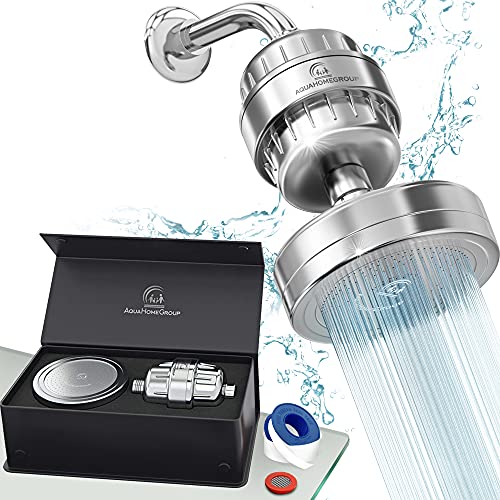
AquaHomeGroup Filtered Shower Head, 20 Plus 3 Stage
$49.95A filtered handheld shower head with KDF media aimed at chlorine and sediment, for an arm with no room for a separate inline filter.
Check before buying: Sold with hard water claims. It reduces chlorine; it does not reduce hardness.
Best for: A shower arm with no clearance for an inline filter body
Check price on AmazonExpert: if hardness is the actual measured problem, this is the real fix
This is the honest expert tier for this search term: not a more expensive shower filter, because no shower filter reaches hardness at any price, but a whole house softener, the only equipment that changes a measured grains per gallon number at every fixture including the shower.

Aquasure Harmony Series 48,000 Grain Water Softener
$629.99 Published specsA whole house ion exchange softener that removes dissolved hardness minerals at every fixture, the only technology on this page that actually changes a measured hardness number.
Best for: A household with a confirmed hardness reading that wants softer water at the shower and everywhere else
Check price on AmazonWho should not buy this tier: Anyone renting, unable to install permanent equipment, or whose only complaint is chlorine on skin and hair rather than a measured hardness reading. An inline shower filter is the correctly sized purchase for that specific complaint.
Hardness is one of the few numbers a household can genuinely measure at home with a test strip, no certified laboratory needed. Test the water before deciding whether the actual problem is chlorine, which a shower filter addresses, or hardness, which only a softener changes. Guessing from how the water feels sends plenty of households toward the wrong purchase in this category.
Do shower filter cartridges need to match the shower head?
An inline cartridge filter installs between the shower arm and whichever head is already in use, so it works with a fixed head, a rain head, a handheld unit or a combination setup without needing a matching head at all. A filtered shower head instead bundles the cartridge into the head itself, which means replacing the whole head down the line rather than only a cartridge, and it is worth weighing that ongoing cost difference against the convenience of one fewer connection point on the shower arm before choosing between the two styles on this page.
How we chose
We did not test this equipment in person and we never claim to. Picks are researched from manufacturer specification sheets, published standards and regulatory limits, and the recurring themes in verified owner reviews. Every pick is matched to a real grain capacity, a real micron rating, a real certified claim or a real flow rating rather than to a price bracket, and it is placed in the tier where its published capability actually belongs. We rejected the unbranded flood that dominates several of these search results, because a softener is a pressure vessel on the main line and a filter is the only thing between a contaminant and a glass of water, and neither is a place for a product with no parts channel and no service path. Where a figure is trade convention rather than a published standard we label it that way, and where a manufacturer does not publish a figure we leave it out instead of estimating it. Above all, we do not recommend equipment for a problem nobody has measured.
Frequently asked questions
Do shower filters soften water?
No shower filter softens water, regardless of what a listing implies. Softening requires an ion exchange resin bed with enough capacity to matter, and a way to regenerate it with salt on a schedule, and there is no room for either inside a device that screws onto a shower arm. A shower filter's actual certified claim, under NSF/ANSI 177, is chlorine reduction, not hardness reduction.
What is NSF/ANSI 177?
NSF/ANSI 177 is the standard written specifically for shower filtration systems, and it certifies chlorine reduction. It does not cover hardness, lead, arsenic or bacteria. Compare that to NSF/ANSI 44, the standard for residential softeners, which is a completely different category of equipment with a resin tank, a brine tank and a regeneration cycle that a shower filter physically does not have.
Will a shower filter help with dry skin or dull hair?
It can, specifically by reducing chlorine, which is a genuine skin and hair irritant on its own. That improvement is easy to mistake for a hardness fix if hardness was never actually measured. The dissolved calcium and magnesium responsible for scale and soap that will not lather pass straight through every shower filter unchanged, since removing them requires ion exchange, not chlorine reduction.
How long do shower filter cartridges last?
A typical inline cartridge is rated around 6 months, though the exact figure depends on chlorine level and water usage rather than a universal number across brands. A filtered shower head cartridge follows a similar published schedule specific to that model. Watch for a return of the chlorine smell or taste as the practical sign it is time to replace, rather than relying on the calendar alone.
Can I install a shower filter myself?
Yes, both the inline cartridge and the filtered shower head style install by hand in a few minutes, using thread seal tape on the connection and no tools beyond hand tightening. Overtightening with a wrench can crack the housing on either style, so hand tight plus a small additional turn is the correct amount of force for either type.
Do I need a whole house softener instead of a shower filter?
Only if a hardness test strip actually confirms a hardness number worth addressing, since a softener is a larger purchase and a permanent installation that a renter or a household unwilling to commit to that scope should not take on for a chlorine complaint alone. If the goal is softer water at every fixture rather than less chlorine at one, a whole house softener is the correct piece of equipment.
Get the complete water treatment shopping list
Every item in the starter, complete and premium systems for both city water and well water, with running totals, in one printable list. It opens with the test kit, because that is genuinely the first purchase. No charge.
One list, no sequence of daily emails, and you can leave at any time.
Researched, not professional advice. This page is compiled from published standards, regulatory limits, manufacturer specifications and owner-review consensus, not hands-on testing. Nothing here diagnoses a water problem or says any product makes water safe to drink. Figures described as a rule of thumb are water treatment trade convention rather than published standards, and they are labeled that way wherever they appear. Test your water before you buy equipment: on city water start with the Consumer Confidence Report your utility publishes each year, and on a private well only a certified laboratory test tells you what you have. Bacteria, nitrate, lead, arsenic and PFAS are not do it yourself topics, they are invisible and tasteless, and they need a laboratory and usually a licensed professional rather than a product. Remember that a certification covers a specific claim under a specific standard, so "NSF certified" with no number attached tells you very little.