Softener sizing
How much resin is in your softener?
Quick answer
A softener nameplate is resin volume multiplied by 32,000, which is the capacity at the maximum salt dose. So a 48,000 grain unit holds 1.5 cubic feet of resin, and at an efficient 8 pound dose it delivers about 33,600 grains rather than 48,000.
Resin is the part that actually softens water, and it is replaceable. A softener whose valve still works but which regenerates constantly usually needs resin rather than a new machine, and that distinction is worth several hundred dollars.
It is also the key to reading a nameplate. Every residential softener nameplate is simply resin volume times 32,000, so the number on the box tells you the tank size and nothing about how the unit will actually run.
Work out your own resin volume
1.5 cubic feet of resin, delivering about 33,600 grains at an efficient setting.
| Figure | Value |
|---|---|
| Resin volume | 1.5 cu ft |
| Nameplate capacity | 48,000 grains |
| Real capacity at 8 lb | 33,600 grains |
| Salt per regeneration | 12.0 lb |
| Salt efficiency | 2,800 grains per lb |
| Against NSF/ANSI 44 | Below the threshold |
Shown with the example figures above. Change any field to run your own numbers.
The working
Published figureresin cubic feet = nameplate grains / 32,000 real capacity = resin cubic feet x grains per cubic foot at your salt dose salt efficiency = grains per cubic foot / salt dose per cubic foot
The resin exchange capacity curve is published by resin manufacturers for standard eight percent crosslinked resin. A published standard, regulatory limit, unit conversion or manufacturer specification. It does not change because somebody disagrees with it.
Resin and rebedding
A softener whose valve still works but regenerates constantly usually needs resin rather than a new machine, and a rebed costs a fraction of the replacement.

Aquasure Harmony Series 48,000 Grain Water Softener
$629.99 Published specsThe volume seller at the 48,000 grain nameplate, with a metered digital control head so it regenerates on water used rather than on a clock.
Best for: A three or four bathroom house on moderately hard to hard city water
Check price on Amazon
Aquasure Harmony Series 40,000 Grain Water Softener
$579.99 Published specsThe step between the 32,000 and 48,000 nameplates, which is often the honest answer for a three person household rather than jumping a full size.
Best for: A two or three person household on hard water
Check price on Amazon
Aquasure Harmony Series 32,000 Grain Water Softener
$523.29 Published specsOne cubic foot of resin at the common entry nameplate, which suits a small household on genuinely moderate hardness and is undersized for much else.
Best for: One or two people on water under about 15 grains per gallon
Check price on Amazon
AFWFilters Upgraded 10 Percent Crosslink Water Softener Refill Kit, 1 Cubic Foot
$232.99 Published specsShips the resin with the funnel needed to get it into the tank, which sounds trivial until the alternative is a cubic foot of beads on a garage floor.
Best for: A first time rebed
Check price on Amazon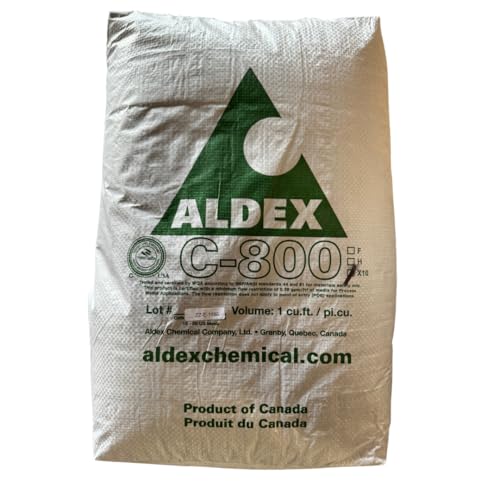
Aldex C800x10 10 Percent Crosslinked Water Softener Resin
$184.00Ten percent crosslinked resin, which resists oxidative damage from a chlorine residual and lasts materially longer on chlorinated city water.
Best for: City water with a noticeable chlorine residual
Check price on Amazon
Aldex C800 8 Percent Crosslinked Water Softener Resin, 1 Cubic Foot
$169.00Standard eight percent crosslinked cation resin from a named resin manufacturer, which is the baseline every capacity figure on this site is calculated against.
Best for: Rebedding a one cubic foot softener on non chlorinated or lightly chlorinated water
Check price on AmazonEvery figure shown is the manufacturer own published specification. None of this is a recommendation for water you have not tested: the arithmetic above is only as good as the numbers you put into it, and on a private well those numbers come from a certified laboratory rather than from a chart.
Nameplate against real capacity
Every nameplate is resin volume times 32,000. At an efficient 8 pound salt dose the same resin delivers about 70 percent of that figure.
Published figure A published standard, regulatory limit, unit conversion or manufacturer specification. It does not change because somebody disagrees with it.
| Nameplate | Resin volume | At 6 lb salt | At 8 lb salt | At 15 lb salt |
|---|---|---|---|---|
| 24,000 grains | 0.8 cu ft | 15,000 | 16,800 | 22,500 |
| 32,000 grains | 1.0 cu ft | 20,000 | 22,400 | 30,000 |
| 40,000 grains | 1.3 cu ft | 25,000 | 28,000 | 37,500 |
| 48,000 grains | 1.5 cu ft | 30,000 | 33,600 | 45,000 |
| 64,000 grains | 2.0 cu ft | 40,000 | 44,800 | 60,000 |
| 80,000 grains | 2.5 cu ft | 50,000 | 56,000 | 75,000 |
| 96,000 grains | 3.0 cu ft | 60,000 | 67,200 | 90,000 |
Resin exchange capacity against salt dose is published by resin manufacturers for standard eight percent crosslinked resin. The nameplate column and the 15 pound column are the same figure, which is the whole point.
Eight percent against ten percent crosslink
Crosslink percentage describes how tightly the polymer is bound. Eight percent is standard and is what every capacity figure on this site is calculated against. Ten percent resists oxidative damage better, which matters on chlorinated city water where a chlorine residual slowly degrades standard resin.
Ten percent costs more and offers no capacity advantage. What it buys is life, and only where there is chlorine to resist. On a private well with no chlorine it is largely wasted money.
When resin needs replacing rather than the softener
Resin does not last forever. It is degraded by chlorine, fouled by iron, and physically broken down by years of backwashing. The symptom is gradually declining capacity: the unit regenerates more and more often while nothing visibly fails.
The test is a hardness strip before and after the unit right after a regeneration. If the softener is regenerating on schedule and still passing hardness, the resin is the suspect rather than the valve. A rebed costs a fraction of a new machine and the valve is usually the part that outlives everything.
Frequently asked questions
How much resin is in a 48,000 grain softener?
1.5 cubic feet. Every residential nameplate is resin volume multiplied by 32,000, which is the capacity at a maximum 15 pound salt dose. At an efficient 8 pound setting that same resin delivers about 33,600 grains, which is the figure worth sizing on.
Is 10 percent crosslink resin worth the extra?
On chlorinated city water, usually yes, because a chlorine residual slowly oxidizes standard eight percent resin and ten percent resists it noticeably longer. It offers no capacity advantage at all. On a private well with no chlorine there is little to resist, so the premium is largely wasted.
How long does softener resin last?
Commonly ten to fifteen years on clean chlorinated water and considerably less where iron is present or chlorine is aggressive. It fails gradually rather than suddenly: capacity declines, the unit regenerates more often, and nothing visibly breaks. A hardness strip before and after the unit is the diagnostic.
Can I replace the resin myself?
Yes, and it is a common job. It involves bypassing and depressurising the unit, removing the control valve, tipping out the old resin, and funnelling the new resin in around the riser tube while keeping debris out of it. A funnel is genuinely necessary. The valve is usually the part that outlives everything else.
Does more resin mean more salt?
Per regeneration, yes, because salt dose is specified per cubic foot. Per year, often the opposite: a larger bed regenerates less often and can run at a more efficient dose, so annual salt consumption frequently falls. NSF/ANSI 44 sets 3,350 grains per pound as the high efficiency threshold and the setting is what decides it.
Get the complete water treatment shopping list
Every item in the starter, complete and premium systems for both city water and well water, with running totals, in one printable list. It opens with the test kit, because that is genuinely the first purchase. No charge.
One list, no sequence of daily emails, and you can leave at any time.
Researched, not professional advice. This page is compiled from published standards, regulatory limits, manufacturer specifications and owner-review consensus, not hands-on testing. Nothing here diagnoses a water problem or says any product makes water safe to drink. Figures described as a rule of thumb are water treatment trade convention rather than published standards, and they are labeled that way wherever they appear. Test your water before you buy equipment: on city water start with the Consumer Confidence Report your utility publishes each year, and on a private well only a certified laboratory test tells you what you have. Bacteria, nitrate, lead, arsenic and PFAS are not do it yourself topics, they are invisible and tasteless, and they need a laboratory and usually a licensed professional rather than a product. Remember that a certification covers a specific claim under a specific standard, so "NSF certified" with no number attached tells you very little.