Iron treatment
5 ppm of clear water iron (ferrous, dissolved): what does it need?
Quick answer
5 parts per million of clear water iron (ferrous, dissolved) calls for a dedicated iron filter ahead of the softener. The EPA secondary standard for iron is 0.3 mg/L, which is an aesthetic guideline rather than a health limit, so this is a staining and taste problem rather than a safety one.
Iron is the most complained about well water problem in the country, and the single most expensive mistake in treating it is buying for the level without identifying the form. Clear water iron, red water iron and iron bacteria are three different problems that need three different machines, and only one of them is really a filter.
Water is clear at the tap and turns orange after sitting in a glass or in the toilet tank.
On this page
Which form you actually have
Clear water iron (ferrous, dissolved) is identified by one simple observation: water is clear at the tap and turns orange after sitting in a glass or in the toilet tank.
Published figure A published standard, regulatory limit, unit conversion or manufacturer specification. It does not change because somebody disagrees with it.
| Form | How you recognize it | |
|---|---|---|
| Clear water iron (ferrous, dissolved) | Water is clear at the tap and turns orange after sitting in a glass or in the toilet tank. | This page |
| Red water iron (ferric, already oxidized) | Water is visibly orange or rusty the moment it leaves the tap, and particles settle out. | |
| Iron bacteria | Slimy orange or rust colored jelly in the toilet tank, on fixtures and inside the pressure tank, often with an odor. |
A glass of water left to stand for an hour separates the first two: clear water iron goes orange as it oxidizes, red water iron was already orange and settles out. Iron bacteria leaves a slimy deposit rather than a gritty one.
What the standard actually says
The EPA sets a secondary maximum contaminant level of 0.3 mg/L for iron and 0.05 mg/L for manganese. Secondary standards are aesthetic guidelines rather than enforceable health limits, and they exist because that is roughly where staining, metallic taste and orange laundry begin.
At 5 ppm this water is 16.7 times the secondary standard, so staining is expected. It is worth being clear that neither figure is a safety threshold: iron at these concentrations is a nuisance rather than a health hazard, and the case for treating it is appliance life, laundry and taste.
What 5 ppm of clear water iron (ferrous, dissolved) needs
A dedicated iron filter ahead of the softener. Some softeners publish a limit this high, but running a softener at the top of its iron rating shortens resin life and the failure is gradual and easy to miss. A filter ahead of it is the durable answer.
If a softener is doing this work, the hardness figure has to be compensated before sizing. The trade adds roughly 3 to 5 grains per gallon for every part per million of dissolved iron, so 5 ppm adds about 20 grains per gallon of apparent hardness. Sizing on the raw hardness figure undersizes the softener and it will run out of capacity early without telling anybody.
Plan on a resin cleaner in the brine tank as routine maintenance rather than as a repair. Iron fouling is gradual and the symptom, slowly declining capacity, is easy to miss for a year.
Oxidizing media and what each one needs
Every oxidizing media has a published pH window, and media installed outside it does not work regardless of how the filter is sized.
Published figure A published standard, regulatory limit, unit conversion or manufacturer specification. It does not change because somebody disagrees with it.
| Media | Iron range | Minimum pH | What to know |
|---|---|---|---|
| Air injection oxidizing filter | Roughly up to 10 to 15 ppm depending on media | pH 6.8 and above | Draws an air pocket each backwash and oxidizes iron against it. Handles hydrogen sulfide as well, which is why it dominates well water systems. |
| Birm | Roughly up to 10 ppm | pH 6.8 and above | Needs dissolved oxygen present and is destroyed by chlorine. Cheap, and fussy about the water it is put in. |
| Manganese greensand | Roughly up to 10 ppm iron, plus manganese | pH 6.2 and above | Regenerated with potassium permanganate, which is a chemical somebody has to keep buying and handling. Manganese removal needs a higher pH than iron removal does. |
| Catalytic carbon | Low iron only | pH 6.5 and above | Aimed at hydrogen sulfide and chloramine rather than at iron. Frequently sold as an iron filter, and it is not one. |
Iron ranges are media manufacturer figures and vary between suppliers, so check the datasheet for the specific media rather than relying on a general table. Birm in particular is destroyed by chlorine and is the wrong choice on any well that gets shock chlorinated.
Why the order of equipment matters here
Iron treatment goes before a softener, not after it. An oxidizing filter turns dissolved iron into particles and catches them, and a softener downstream then only has hardness to deal with. Reversed, the softener sees the full iron load and fouls.
Ultraviolet, if there is any, goes last. Published manufacturer limits put iron below 0.3 mg/L and manganese below 0.05 mg/L for ultraviolet to work, because iron both shades the water and scales the quartz sleeve. A UV system installed ahead of iron treatment delivers a fraction of its rated dose while every indicator reports normal operation.
The full order is worked through in what order should water treatment equipment go in.
Equipment for 5 ppm of clear water iron (ferrous, dissolved)
Chosen against the numbers on this page rather than from a general list, so the recommendation cannot contradict the arithmetic above. Every figure quoted is the manufacturer own published specification, and none of it is a recommendation for water you have not tested.
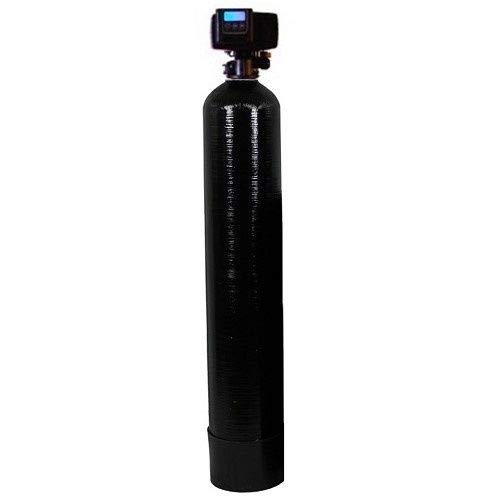
DuraWater Fleck 5600SXT Air Injection Iron Filter, 1.5 Cubic Foot
$899.00 Published specsDraws an air pocket on each backwash and oxidizes iron against it with no chemical feed, on the widely serviced Fleck 5600SXT valve.
Best for: Well water with measured iron, manganese or a sulfur odor together
Check price on Amazon DuraWater Air Injection Iron Filter, 1.0 Cubic Foot
$810.00The one cubic foot version of the same air injection platform, for a smaller house or a lower iron level.
Best for: A smaller household with a moderate measured iron level
Check price on Amazon
AFWFilters Air Injection Iron Filter, Black Series
$999.00An air injection build that states iron, manganese and hydrogen sulfide together, from a supplier that also sells the media and the valve separately.
Best for: A well with the classic combination of orange staining and a rotten egg smell
Check price on Amazon
AFWFilters AIS10-2510 Air Injection Iron, Sulfur and Manganese Oxidizing Filter
$1,399.00A larger air injection system for higher measured levels than the entry units are rated to handle.
Best for: A well whose laboratory result is well above what a softener or a cartridge could address
Check price on Amazon
AFWFilters Air Injection Platinum Iron, Sulfur and Manganese System, 1.5 Cubic Foot
$1,909.00The top of the air injection range here, with the largest media bed and the highest published capability.
Best for: A difficult well where a smaller unit has already failed to keep up
Check price on Amazon
iSpring WCFM400K Whole House Iron and Manganese Water Filter System
$1,097.25A digital control backwashing iron and manganese filter from a manufacturer with a direct support channel.
Best for: Iron and manganese without a significant sulfur odor
Check price on AmazonHow we chose
We did not test this equipment in person and we never claim to. Picks are researched from manufacturer specification sheets, published standards and regulatory limits, and the recurring themes in verified owner reviews. Every pick is matched to a real grain capacity, a real micron rating, a real certified claim or a real flow rating rather than to a price bracket, and it is placed in the tier where its published capability actually belongs. We rejected the unbranded flood that dominates several of these search results, because a softener is a pressure vessel on the main line and a filter is the only thing between a contaminant and a glass of water, and neither is a place for a product with no parts channel and no service path. Where a figure is trade convention rather than a published standard we label it that way, and where a manufacturer does not publish a figure we leave it out instead of estimating it. Above all, we do not recommend equipment for a problem nobody has measured.
Frequently asked questions
Is 5 ppm of iron bad?
The EPA secondary standard is 0.3 mg/L, which is an aesthetic guideline rather than a health limit. At 5 ppm you are above it, so staining, metallic taste and orange laundry are expected. Iron at these levels is a nuisance rather than a health hazard, and the case for treating is appliance life, laundry and taste.
Will a water softener remove this iron?
Not reliably at 5 ppm. Some softeners publish limits up to 5 ppm, but running one at the top of its iron rating shortens resin life and the failure is gradual and easy to miss. A dedicated iron filter ahead of the softener is the durable answer.
How do I tell clear water iron from red water iron?
Draw a glass and leave it standing for an hour. Clear water iron comes out of the tap clear and turns orange as it oxidizes in the glass. Red water iron is already orange at the tap and settles out as sediment. Iron bacteria is different again: a slimy orange jelly in the toilet tank and on fixtures rather than a gritty deposit.
Does iron in well water stain everything permanently?
Iron staining on fixtures and laundry is usually removable with a product formulated for rust rather than a general cleaner, and chlorine bleach sets iron stains rather than removing them, which is a common and frustrating mistake. Permanent damage is more about appliance life than about appearance, and treating at the source is what stops it recurring.
What pH does an iron filter need?
It depends entirely on the media. Birm and air injection generally want pH at or above about 6.8, manganese greensand works for iron from about 6.2 but needs considerably higher for manganese, and catalytic carbon is aimed at hydrogen sulfide rather than iron. Media installed outside its published window does not work, which is why a full laboratory panel including pH comes first.
Get the complete water treatment shopping list
Every item in the starter, complete and premium systems for both city water and well water, with running totals, in one printable list. It opens with the test kit, because that is genuinely the first purchase. No charge.
One list, no sequence of daily emails, and you can leave at any time.
Researched, not professional advice. This page is compiled from published standards, regulatory limits, manufacturer specifications and owner-review consensus, not hands-on testing. Nothing here diagnoses a water problem or says any product makes water safe to drink. Figures described as a rule of thumb are water treatment trade convention rather than published standards, and they are labeled that way wherever they appear. Test your water before you buy equipment: on city water start with the Consumer Confidence Report your utility publishes each year, and on a private well only a certified laboratory test tells you what you have. Bacteria, nitrate, lead, arsenic and PFAS are not do it yourself topics, they are invisible and tasteless, and they need a laboratory and usually a licensed professional rather than a product. Remember that a certification covers a specific claim under a specific standard, so "NSF certified" with no number attached tells you very little.